Oldest evidence of a plague outbreak found in prehistoric graves, rewriting the disease’s history
In prehistoric graves of children in Siberia, scientists have found the world’s oldest evidence of a plague outbreak.
Read more Luigi Mangione will use a psychiatric defense in state murder case
The discovery, described in a study published Wednesday in the journal Nature, rewrites the history of one of the most consequential diseases in human history.
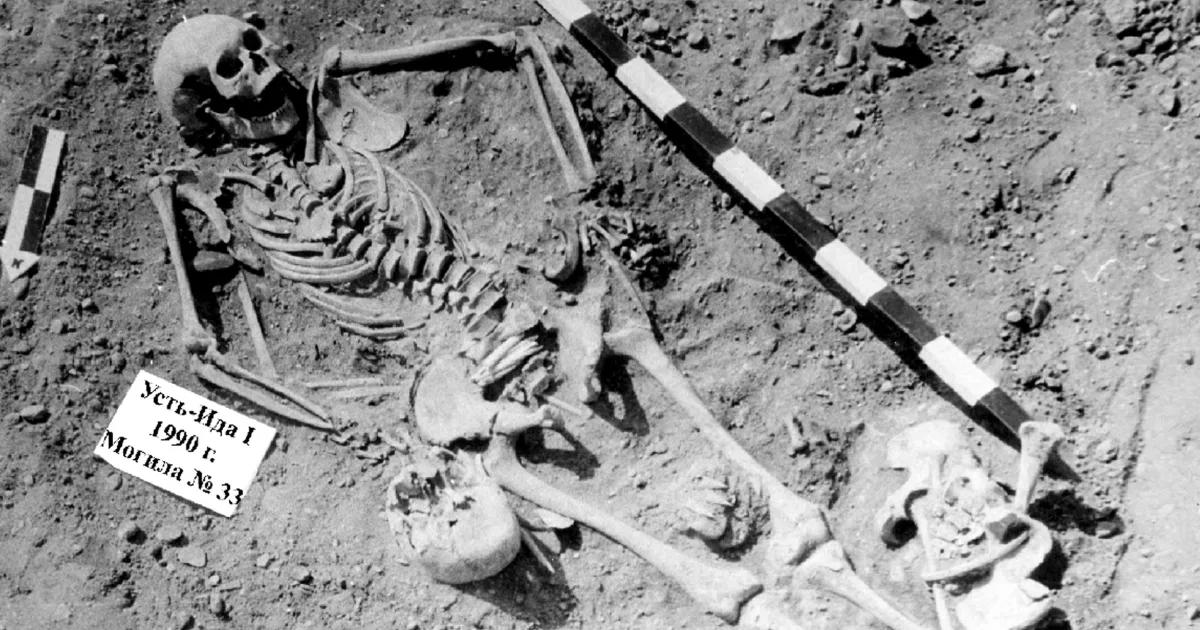
The graves, on the banks of the Angara River, contained remains from multiple generations of hunter-gatherers, along with archaeological remnants like arrowheads that date back about 5,500 years. When researchers did genetic testing on the skeletons’ teeth, they found DNA of the bacterium that causes plague in about 40%.
The study’s lead author, Ruairidh Macleod, a postdoctoral fellow at the University of Oxford, said one grave contained a set of cousins or sisters 4 to 9 years old.
“We see three very young girls, all buried at the same time, having presumably died at the same time. We detect lots of plague DNA in all three of these individuals,” he said, adding, “It’s clearly having a very tragic impact on the children in particular in these communities.”
The study suggests there were two separate plague outbreaks in the hunter-gatherer communities. It’s the first evidence that an ancient version of plague most likely spread among family members and that it affected prehistoric groups not previously thought to have been devastated by the disease. Although a previous study described a plague infection in a single hunter-gatherer who died about 5,000 years ago in present-day Latvia, it did not find evidence of an outbreak or human-to-human transmission.
Plague has changed the course of history several times, most notably in the pandemic that began in 1347, when it swept across Europe, wiping out half of the continent’s population. Outbreaks of the “Black Death,” as it became known, re-emerged routinely in Europe for centuries afterward, periodically disrupting societies.
Scientists have long associated the initial emergence of plague and other infectious epidemic diseases with the Neolithic Revolution, sometimes called the first agricultural revolution. That’s when many human societies shifted away from nomadic lifestyles focused on hunting and foraging and shifted toward farming and keeping domesticated animals. In that new dynamic, higher densities of people lived close to animals that could carry harmful pathogens.
But outside researchers said the new study undermines that narrative.
“It is clear evidence of an outbreak in prehistoric times,” said Nicolás Rascovan, who researches ancient DNA at the Institut Pasteur in Paris and was not involved in the study. He added that the study “argues against agricultural lifestyles as the major driver of plague emergence.”
The new findings suggest that the plague most likely emerged periodically in certain hunter-gatherer communities that were close to wild animals hosting the bacterium. From there, the researchers believe it was most likely transmitted within family groups.
Read more Rex Heuermann to be sentenced in Long Island’s Gilgo Beach serial murders after pleading guilty
“You have this kind of notion that the hunter-gatherer time was this kind of clear time where there were no diseases, no pathogens,” said Eske Willersev, an evolutionary geneticist at the University of Copenhagen who contributed to the new study. “Now we can see, well, it wasn’t that easy to be a hunter-gatherer either, right? You got hit by plague again and again, and it’s probably been very common.”
The bacterium that Willersev and his collaborators found, called Yersinia pestis, is the same species that caused the Black Death, but the researchers think it had not yet evolved some major features that drove later outbreaks. Scientists think the bacterium did not pick up the ability to spread via flea bites and to cause bubonic disease, which swells the lymph nodes, until about 3,800 years ago.
Instead, the researchers think the prehistoric outbreaks were most likely driven by pneumonic plague, a form in which the bacterium takes root in the respiratory system.
“Pneumonic plague doesn’t require the genes that bubonic plague does,” Macleod said. “It’s spread by coughing. It’s an infection of the lungs, but it’s extremely severe, and it’s extremely deadly.”
The skeletons analyzed in the new study were excavated by Russian archaeologists in the 1980s, then preserved. They came from four cemetery sites near Lake Baikal, on prominent fishing grounds for prehistoric people in modern-day Siberia. Some of the graves were unusual, the study says, because they featured multiple skeletal remains, and there was no evidence they had been reopened. At one site, many of the skeletons were those of children.
The researchers therefore think multiple children most likely died at the same time and were buried together, which suggests young people might have been particularly susceptible to the disease or to dying from it.
Extracting DNA from the molars of the skeletons allowed the scientists to analyze familial relationships in addition to looking for evidence of plague-causing bacteria. Although they found the bacterium in just 18 of 46 of the skeletons analyzed, the researchers think that the vast majority of the subjects most likely died of plague and that in many cases the bacterium was not preserved or went undetected. (Ancient DNA is difficult to work with, and even at burial sites known to exclusively contain plague victims, researchers have not always been able to identify the bacterium’s DNA.)
“An ancient DNA study of plague victims from a plague pit at Smithfield in medieval London showed an overall detection rate of 20%,” Macleod said. Given that the rate at the Siberia site was nearly twice that, he continued, “it’s consistent with pretty much everybody having died of plague.”
Plague cases still crop up occasionally in some rural areas. If plague is detected quickly, it can be treated with antibiotics. Madagascar reported more than 2,400 cases of pneumonic plague in 2017. A person in Arizona died of the infection last year in the U.S.’ first recorded plague death since 2007.
Read more Police rescue hundreds of cats from being eaten in Vietnam with bust of major animal theft ring