‘Things are going to be different’: Danny Glover reveals Alzheimer’s diagnosis
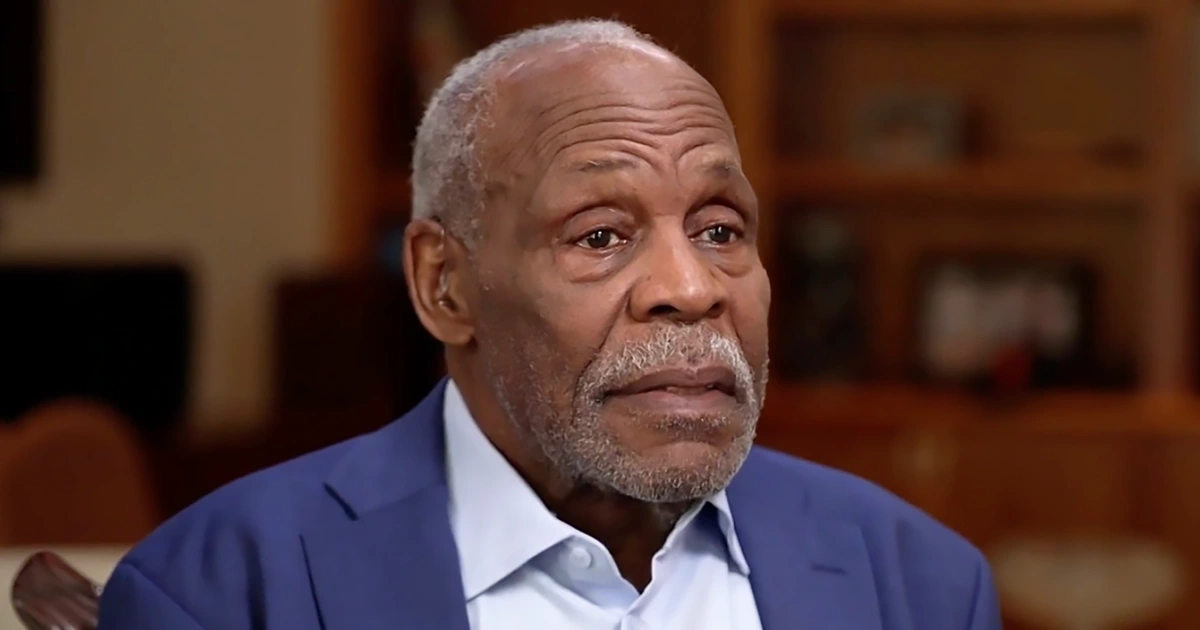
Legendary actor Danny Glover revealed in a Today exclusive interview that he has been living with Alzheimer’s disease for multiple years.
Read more South Africa says over 900 arrested during nationwide anti-migrant protests
Glover, 79, and his family spoke with former NBC Nightly News anchor Lester Holt in an interview aired July 1. They gave a glimpse into what life is like now for the four-time Emmy winner and why he decided to publicly share his diagnosis now.
“I’m sure as it advances, things are going to be different and changing,” Glover said.
However, with a strong family behind him, he feels he has the support to face the incurable brain disorder.
“Absolutely,” he said. “They’ve got my back.”
Glover is one of more than 7 million Americans over age 65 living with Alzheimer’s disease, a progressive, fatal neurodegenerative disease that robs people of their memories. Black people are twice as likely to develop Alzheimer’s or another form of dementia compared to white people, according to the .
The Alzheimer’s Association is now working with Glover and advises that simple actions like staying physically active, managing blood pressure and diabetes, getting quality sleep and staying socially connected can be crucial in the fight against Alzheimer’s.
The organization emphasizes how early detection can make a difference because cognitive decline can start up to 15 years before a dementia diagnosis.
Since being diagnosed, Glover’s movements, speech and memories have slowed. However, he is still active, attending events and engaging with his community in his native San Francisco.
“I could live with it, in a sense,” Glover said about his condition.
With more than 170 acting credits across film and television during the course of nearly 40 years, the “Lethal Weapon” star has cemented his place in television and film history. He and his family believe they can help remove the stigma surrounding Alzheimer’s by coming forward about his condition.
“I think it’s really important for him to have control of his own narrative, of his own life story,” Glover’s daughter, Mandisa, told Holt. “That’s really important. And the time is now. What better time but now for him to speak for himself?
“It’s important because people ask questions sometimes, and I don’t want to be a dishonest person and say, ‘Oh, yeah, everything is all right. It’s all great,’” she added.
Glover also reflected with Holt on an acting career that began in his early 20s at San Francisco State. Famous playwright Amiri Baraka encouraged him to take to the stage.
“He came and he said, ‘Some of you so-called revolutionaries come out and do plays,’” Glover said. “I had never been onstage before.”
He catapulted to movie stardom in the 1980s and ‘90s as Det. Roger Murtaugh alongside Mel Gibson’s Martin Riggs in the “Lethal Weapon” films. In a classic scene in “Lethal Weapon 2,” he has to be rescued after sitting on a toilet in his home that is strapped with a bomb. It became so memorable that Glover said people were bringing toilets to his public appearances.
“It’s events where somebody would bring their toilet up, and I would sign it,” Glover said.
Read more Defying Pope Leo XIV and risking schism, traditionalists go ahead with Latin Mass consecrations
Glover was also known for his dramatic work in films like “Places in the Heart” in 1984 and “The Color Purple” in 1985. He regards the former as his most personal film because of a devastating loss in his personal life at the time.
“It’s for my mother,” he said. “My mother, on the same day that I was told I was going to play the role, she had an automobile accident.”
The death of his mother, Carrie, was particularly devastating because his parents inspired Glover’s passion for social justice and equality.
“The one thing about my parents was their activism,” Glover said. “A sense of being and belonging and making the contribution. When I saw the Montgomery bus boycott (in 1955-56), I knew I wanted to be like those people. I wanted to be in that moment and part of the role.”
Glover started a production company to develop and fund socially conscious, politically relevant films from underserved communities around the world.
He also served as a goodwill ambassador for the United Nations Development Program from 1998-2004, working on global campaigns against poverty, disease and combating HIV/AIDS across Africa, Latin America and the Caribbean. The actor also was appointed as a goodwill ambassador for UNICEF in 2004.
His activism earned him the Jean Hersholt Humanitarian Award at the 2021 Academy Awards, during which he cited his mother as his inspiration in his speech.
“We have challenges in the world,” Glover said on Today. “ I think art becomes a reframe, a way of looking at that, you know?”
Glover said he still speaks with young people about becoming involved in their communities despite not being able to travel much due to his condition.
“Justice is our collective responsibility,” he said. “One thing I learned from my parents most of my life is the capacity of people to change through their own. They become the architect of their change.”
After giving so much of himself over the years, Glover now has a large group of friends and family ready to return that support as he lives with Alzheimer’s disease.
His youngest brother, Martin Glover, has worked with him throughout his career and is now part of that foundation.
“He took me under his wing, and I love him to death,” Martin said on Today. “And I’m here to help him now.
“It’s my turn. … We talk, and we share times about our parents, our mothers and our family. So it’s all about family.”
Read more Haaland scores deciding goal as Norway wins its 1st World Cup knockout game, beating Ivory Coast