3 months, 21 dead gray whales: Why so many carcasses are washing up on Pacific shores
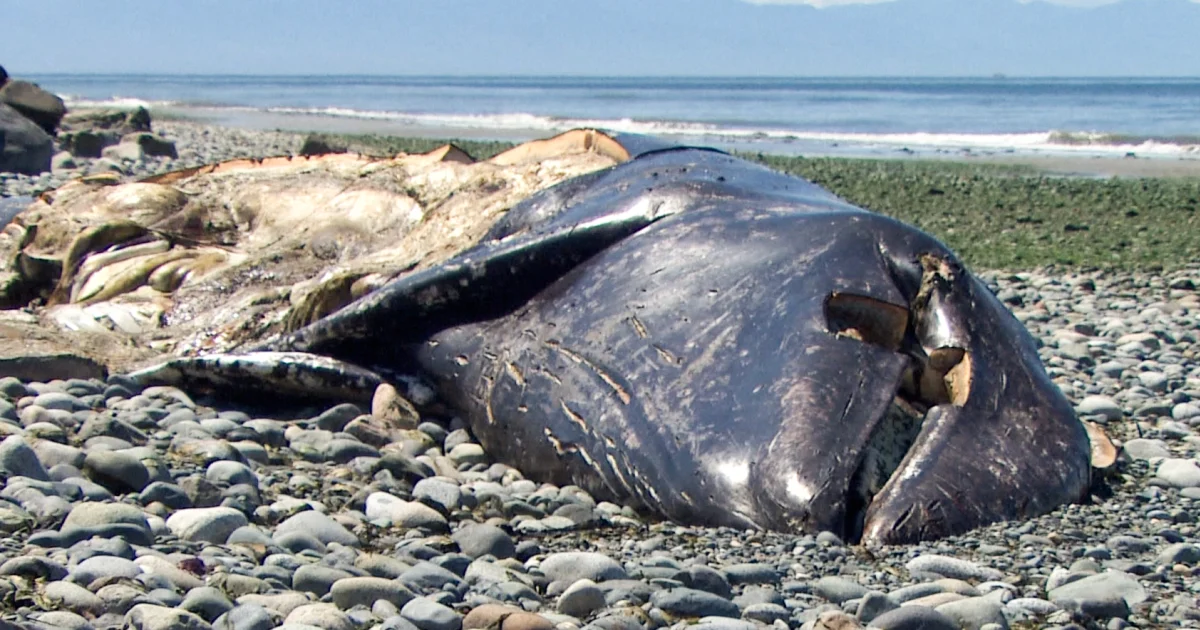
Dead, emaciated gray whales have been washing up on Washington state shores at a shocking pace over the last few months. Since March, 21 whales have turned up dead along the shoreline, according to research biologist John Calambokidis.
Read more Send Laura Jarrett your questions about the Supreme Court and more
“I am alarmed,” he said.
Calambokidis, the founder of the Cascadia Research Collective, has studied gray whales for decades. The species had come to represent one of the most impressive conservation turnarounds in history — until recently. Over the last seven years, Calambokidis said, gray whale populations have suffered a “precipitous decline.”
Many of the dead whales have appeared thin and weak. Some exhibited strange behavior before they died, like apparent navigational problems, which could have been a result of their poor condition.
Scientists said the plight of gray whales is an example of how global warming is triggering effects — in this case the decline of sea ice — that seem distant but have far-ranging consequences.
“We know it’s a food supply issue,” Calambokidis said. “We know the Arctic has gone through dramatic changes because of climate change.”
He and other researchers think changes in sea ice have fueled a chain of events that are decreasing the availability of the whales’ favorite prey in the region.
Read more Messi joins high-profile World Cup injury concerns just weeks before big kickoff
“They are very sensitive to these environmental conditions,” said Josh Stewart, an assistant professor at Oregon State University’s Marine Mammal Institute, who has led research into the whales’ decline. “I don’t think we’re ever going to see an Arctic that can support 25,000 gray whales again, at least not in my lifetime.”
Gray whales have been washing up on Pacific shores by the dozen since 2019, when the National Oceanic and Atmospheric Administration declared their deaths an “unusual mortality event.” But the species briefly rebounded in 2023, leading some scientists to think the whales were experiencing a cyclical boom and bust, potentially magnified by climate change.
It has been in free fall for the last few years.
“We thought we were seeing a bit of rebound, but it was so short-lived,” Calambokidis said. Rather than alternating between boom and bust, he added, a more accurate description of the whales’ trajectory is “boom, bust, bust, bust.”
Most Eastern North Pacific gray whales travel north every spring and summer to the Arctic, where they feast on tiny shrimplike creatures called amphipods. Then the whales swim south in the fall to spend winter in lagoons off Mexico, where they reproduce and raise calves.
Read more Fake ICE agents on the rise and the status of a U.S.-Iran peace deal: Morning Rundown