Rep. John Larson’s defeat in Connecticut makes 10 House members who have lost primaries this year
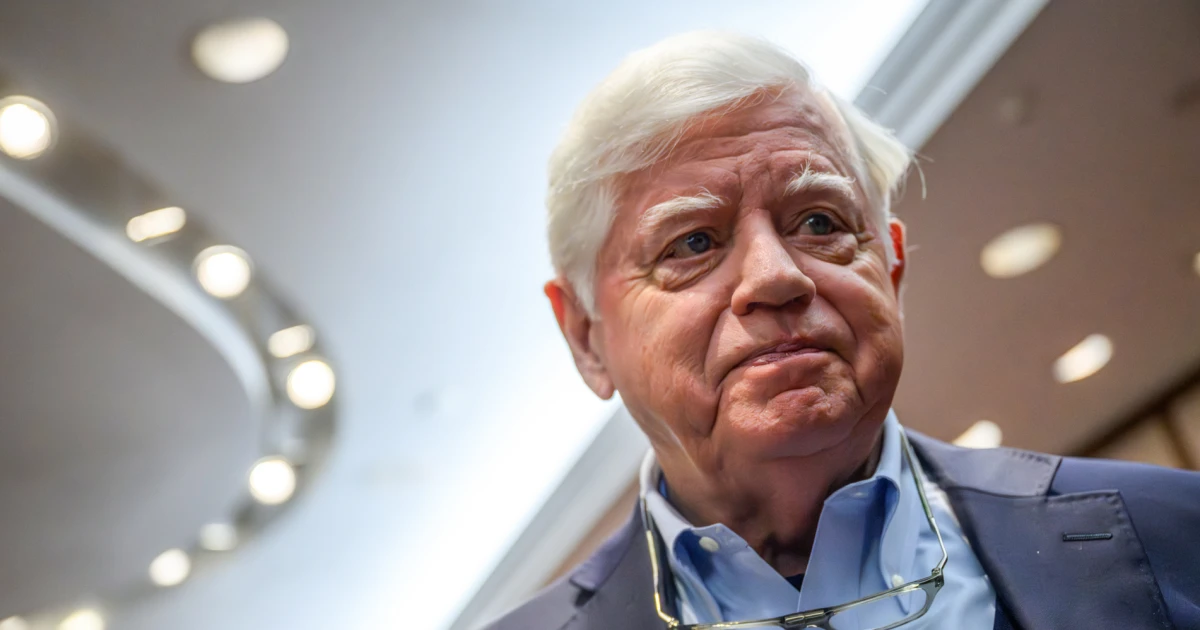
Longtime Democratic Rep. John Larson’s defeat in Connecticut on Tuesday makes him the 10th House incumbent to lose a primary so far this cycle — an unusually high figure that comes as Democrats push their leaders to pass the torch to a new, more progressive generation and Republicans continue to reckon with a party rebuilt in President Donald Trump’s image.
Read more Russell Westbrook, NBA MVP and triple-double leader, retires after 18 seasons
That’s layering on top of extra, mid-decade redistricting, which has driven yet more instability by packing some districts with a handful of new voters with no loyalty to their incumbent representative.
Taken together, it’s why more incumbents have lost primaries this election cycle than any year since 1970, national redistricting years excepted.
Seeking a new generation of leaders
Larson, 78, had been a member of party leadership and collected powerful Democratic allies over four decades in Connecticut politics. But he immediately found himself on defense when former Hartford Mayor Luke Bronin jumped into the race, with the 47-year-old calling for new urgency among Democrats and for voters to turn the page.
Bronin proved to be a strong fundraiser and drew significant support from wealthy allies. The challenger framed his candidacy as one that was better positioned to meet the energy and gravity of the moment, ultimately winning the support of a majority of primary voters.
“It’s so important to have Democratic members of Congress using that platform not just to give red face speeches to an empty chamber for the C-SPAN cameras, but to … carry our message, to win people back who lost faith in our party,” he told NBC News in an interview in May.
“Congressional seats were not meant to be lifetime appointments and the Democratic Party would be so much stronger if we had more people who recognize that part of leadership is knowing when it’s time to pass the torch,” Bronin added.
Age has been a key dynamic in a slew of challenges to incumbent Democrats this year — some successful, some unsuccessful and some yet to be decided. In California, there are several Democrat-versus-Democrat general election matchups lying in wait after the state’s all-party, top-two primaries.
Overall, age has served as an important accelerant for anti-incumbent sentiment in primaries this year, along with other important factors at play.
Energized progressives nab key wins
Four Democratic incumbents fell to challengers expressly pitching themselves as democratic socialists or as allies of the movement that’s gaining traction within the Democratic Party.
Reps. Dan Goldman and Adriano Espaillat lost in New York, Diana DeGette fell in Colorado and Shri Thanedar lost in Michigan.
Those New York City results, alongside another progressive victory in an open seat, sent shockwaves through the Democratic Party locally and nationally, as New York City Mayor Zohran Mamdani and his allies proved the staying power of their movement.
Those primary results are set to send to Congress a pair of democratic socialists in their 30s, Claire Valdez and Darializa Avila Chevalier, along with Brad Lander, who does not identify as a socialist but is a progressive and a key Mamdani ally whose endorsement helped the mayor’s election bid.
Read more Arkansas trooper threw teen down and punched her in the face during traffic stop, lawsuit says
Espaillat, Goldman and DeGette — who lost to democratic socialist and activist Melat Kiros — all tried to push back against the attacks, touting their support for progressive policies and leaning on old-school endorsements. But in the end, their opponents successfully redefined what it means to be a modern era progressive, casting their opponents as having failed to meet the moment.
Thanedar’s defeat at the hands of state Rep. Donavan McKinney was a bit more complicated, given the incumbent’s political history. Thanedar first burst onto the political scene as a self-identified progressive and narrowly won his seat in 2020, but he subsequently broke with the Democratic Socialists of America in 2023 — though the local chapter says he was expelled.
Meanwhile, McKinney ran not only as the progressive in the race, but also as a native son of Detroit with accomplishments to tout from state government.
Redistricting helps lead to more losses
Republican redraws of state congressional maps also played a role in some losses.
The clearest examples are in Texas, where Dallas-area Democratic Rep. Julie Johnson and Houston Democratic Rep. Al Green were forced to run in new districts. The new maps set off a chain reaction that pushed Johnson into some new territory, where she ultimately fell to former Democratic Rep. Colin Allred, a well-known and well-funded Democrat who had previously been running for Senate.
The GOP’s decision to eliminate a Democratic-held seat in Houston meant that Green had to run for re-election in a district that included new voters he hadn’t previously represented. And that move put him up against a much younger challenger, Rep. Christian Menefee, who pitched himself as the candidate more likely to get results for the district at a key moment.
Tennessee’s partisan redistricting also helped cost Republican Rep. Andy Ogles his seat. The attempt to carve up Memphis to turn the only Democratic-held district blue ended up substantially redrawing Ogles’ district, though the incumbent also faced personal difficulties of his own making.
His loss to Charlie Hatcher, the former state agriculture commissioner, wasn’t as much about ideology, and both candidates hugged Trump tight. Instead, Hatcher won support from key establishment figures as the incumbent has spent years facing a slew of controversial headlines.
It’s Trump’s party
Trump has seen some high-profile primary losses so far this cycle. But two of the three Republican incumbents who lost their House primaries this year were defeated because voters saw them as insufficiently aligned with the president — just like Sens. John Cornyn, R-Texas, and Bill Cassidy, R-La., who lost high-profile Senate primaries.
Trump’s role was the lesson from the first incumbent loss of the cycle, Republican Rep. Dan Crenshaw of Texas — the only House incumbent running for re-election in the state who didn’t get Trump’s endorsement, and the only incumbent to lose that night.
Crenshaw had sought to push back on the idea he wasn’t “MAGA enough,” but ultimately his high-profile support for Ukraine and criticism of Republicans who claimed the 2020 election was stolen fed the narrative that allowed conservative state Rep. Steve Toth to win.
And then there was Republican Rep. Thomas Massie, whose penchant for bucking the president’s priorities in Kentucky made him a persona non grata among Trump and his allies. Massie fell short to the Trump-backed Ed Gallrein, a former Navy SEAL who benefited from tens of millions of dollars in ad spending from pro-Trump groups.
Read more Defense in Charlie Kirk’s killing say shooter hit the ‘intended target,’ did not endanger others

Related Posts

James Talarico and Ken Paxton hold a day of dueling rallies as Texas begins early voting
Mike Rogers bets he can outflank Abdul El-Sayed with a low-key campaign in Michigan’s Senate brawl