Half of Afghan women rarely leave home as Taliban restrictions deepen, U.N. says
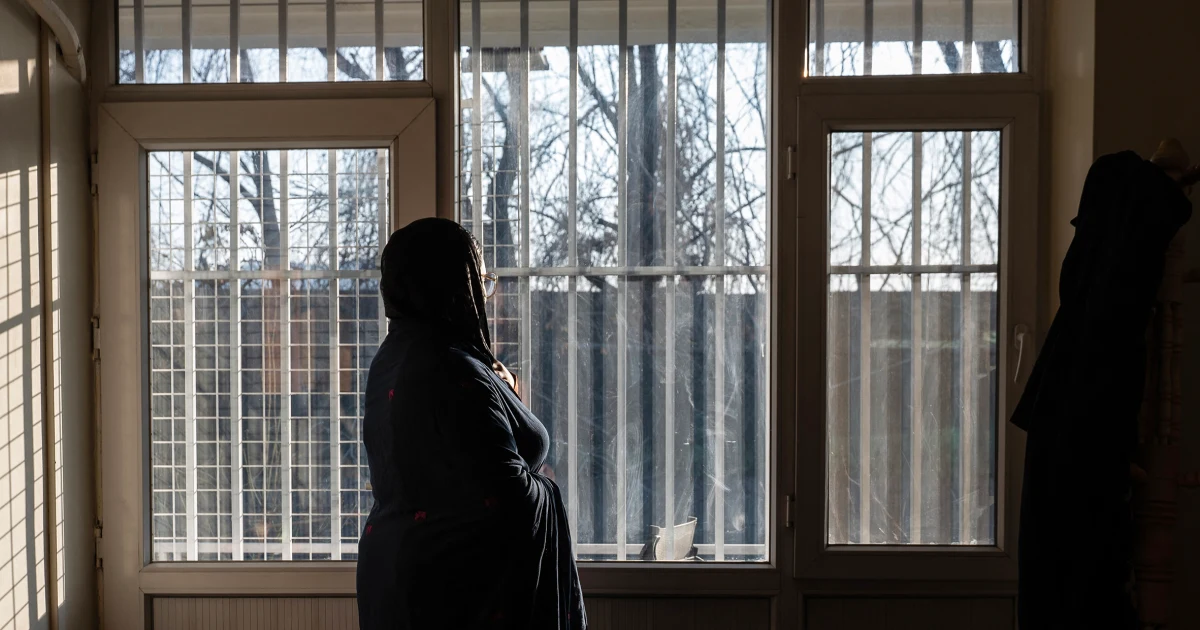
GENEVA — Half of Afghan women now leave their homes only once or twice a month as Taliban-imposed restrictions curtail their freedom of movement and participation in public life, according to data released by U.N. Women on Wednesday.
Read more Taiwan says it was targeted last month in AI-driven hacking campaign
As the Taliban prepare to mark the fifth anniversary of their return to power this week, Afghanistan remains the only country in the world to ban girls from secondary education and women from attending university, according to the U.N. agency, which promotes gender equality.
“Half a decade after the Taliban takeover in August 2021, Afghanistan has systematically dismantled the rights of half its population, making it a global outlier with no parallel in the modern world,” U.N. Women said in a statement.
The Taliban-run Ministry for the Propagation of Virtue and the Prevention of Vice, which enforces many of the government’s rules on women, did not immediately respond to a request for comment. The government’s chief spokesman, Zabihullah Mujahid, also did not immediately respond.
The Taliban have barred an estimated 2.4 million Afghan girls from secondary education since they regained power in Afghanistan in 2021, the United Nations Educational, Scientific and Cultural Organization said Tuesday.
U.N. Women said the Taliban authorities have issued more than 100 decrees targeting women and girls since taking power, institutionalizing discrimination and deepening what it described as the world’s most severe women’s rights crisis.
The Taliban argue they respect women’s rights in accordance with their interpretation of Islamic law and Afghan culture.
Read more ‘Creepy thing to do’: Pardoned Jan. 6 defendant convicted in hair-touching case
More than half of women surveyed by the U.N. agency reported leaving home twice a month or less, while nearly three-quarters said they felt unsafe going out without a male guardian, known as a mahram.
The restrictions have also fueled a worsening mental health crisis, according to the U.N. agency. Seven in 10 women described their mental health as “bad” or “very bad,” citing isolation, loss of opportunities and limited access to support networks.
The agency warned that recent decrees had further weakened women’s legal protections. Measures introduced this year abolished legal equality between men and women before the law, strengthened men’s authority within marriage and made it more difficult for women to seek divorce, it said.
Women also remain largely excluded from the economy. Only 7% of women are employed compared with 84% of men, according to the U.N. Women report.
The agency said its report was based on a door-to-door survey of 2,190 people from February to March 2025 and telephone surveys of 2,811 people conducted from April to May 2026.
Read more Army gynecologist pleads not guilty to secretly recording patients