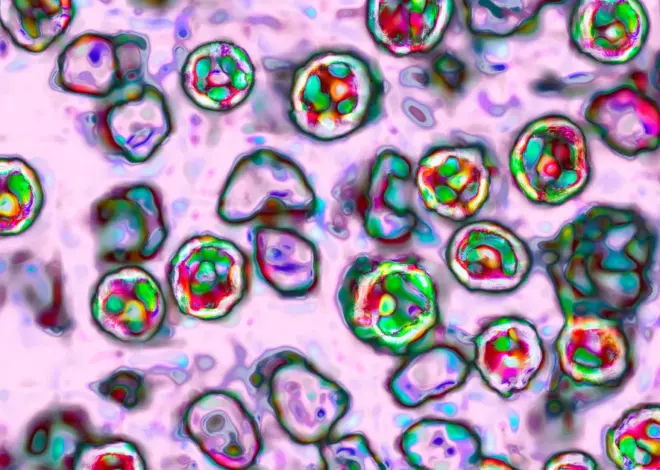
CDC is tracking the source of a parasite that causes ‘explosive’ diarrhea
Cyclosporiasis, a nasty parasitic infection that causes “explosive” watery diarrhea, has sickened dozens of people in Michigan and other parts of the United States.
Read more From The Sports Desk: The U.S. advances, but loses Folarin Balogun to costly red card
Cases of the gastrointestinal illness, caused by a parasite that spreads through contaminated food, have been on the rise in multiple states since May, according to the U.S. Centers for Disease Control and Prevention. At least 20 people have been hospitalized nationwide so far.
The CDC is working to identify potential sources of the parasitic infection, which is commonly linked to fresh produce.
Just last week, an unusual cluster of cases was reported in the Midwest. Health officials in Michigan are investigating a “sudden and large” increase in cases of cyclosporiasis, the Michigan Department of Health and Human Services said.
Since June 22, 2026, more than 170 cases of cyclosporiasis have been reported in southeast Michigan — up from 150 several days prior. That’s out of the norm for the state, officials say. “Michigan typically identifies 50 cases a year,” a spokesperson for the MDHHS said.
Cyclosporiasis is a seasonal illness in the U.S., and cases usually peak between May and August, per the CDC.
It’s not uncommon to see infections increase in the summer. However, the latest spike in Michigan has health officials on high alert and urging people to seek care if they experience symptoms.
Cyclosporiasis cases in the U.S.
Nationwide, at least 145 cases of cyclosporiasis were reported in 17 U.S. states between May 1 and June 16, according to the most recent data from the CDC. This data does not include the recent rise in cases in Michigan.
Per the CDC, New York has reported the highest number of cases, followed by Illinois and Texas.
The infected range in age from 5 to 86 years old. There have been at least 20 hospitalizations, but no deaths reported so far.
“The true number of people sick with cyclosporiasis was likely higher than the number reported,” the CDC notes.
More recently, over 170 cases of cyclosporiasis have been reported since last week across seven counties in Michigan: Monroe, Lenawee, Washtenaw, Wayne, Livingston, Shiawassee and Jackson. The source has not been identified so far, per the MDHHS.
The CDC is working with the U.S. Food and Drug Administration and local officials to investigate clusters of cases in multiple states. The agency says those infected became sick after eating food in the U.S., and none reported traveling internationally in the weeks prior.
Currently, there is “no evidence of a single, multi-state cyclospora outbreak linking all cases,” the CDC said in an update on July 1. Investigations are ongoing.
The U.S. typically sees several hundred cases of cyclosporiasis annually. In recent years, the number of infections reported in the U.S. has increased significantly.
In 2019, an unusually high number of cyclosporiasis infections (4,703) were identified, according to a 2023 report from the CDC.
Read more Inside Kyiv’s subway as a deadly Russian attack unleashes a ‘night of horror’
What is cyclosporiasis?
Cyclosporiasis is a type of food poisoning. It can cause severe diarrheal illness, but it’s not usually life-threatening, per the CDC.
The culprit, Cyclospora cayetanensis, is a microscopic parasite that’s found in human feces.
Cyclosporiasis occurs in many countries, including the U.S., but the infection is most common in tropical and subtropical regions.
How does cyclosporiasis spread?
Cyclosporiasis spreads through the fecal-oral route. People become infected when they ingest the tiny cyclospora parasite by consuming food or water that’s contaminated with feces.
People who are infected shed the parasite in their stool. According to the CDC, it usually takes one to two weeks outside the body for the parasite to become infectious, so human-to-human transmission is highly unlikely.
In the U.S., cyclosporiasis outbreaks have been linked to fresh fruits and vegetables, including basil, cilantro, raspberries and snow peas, per the CDC.
In 2022, a large cluster of cases in Florida was attributed to a Caesar salad kit containing bagged romaine lettuce.
The best way to prevent infection is to avoid consuming food or water that may be contaminated with feces, the CDC says. Following proper hand hygiene and safe food handling practices can also lower your risk of foodborne illness.
Cyclosporiasis symptoms include diarrhea
It takes anywhere from two to 14 days after ingesting the cyclospora parasite to show signs of illness.
The main symptom of cyclosporiasis is severe, watery “explosive” diarrhea.
People who get infected may also experience appetite loss, stomach cramps, nausea, vomiting and a low-grade fever, according to the Cleveland Clinic.
Cyclosporiasis can last for a few days to over a month or longer. Symptoms may come in waves, and return more than once after going away, also known as “relapses,” per the CDC.
The infection is typically treated with a combination antibiotic. However, most people with healthy immune systems will recover from cyclosporiasis on their own, the CDC says.
Individuals with weak immune systems are at higher risk for prolonged illness and relapses of symptoms.
Individuals who experience cyclosporiasis symptoms or severe, sudden gastrointestinal illness should contact their health care provider, the CDC says. If you test positive for the parasite, contact your local health department.
Read more Rep. Alexandria Ocasio-Cortez endorses Abdul El-Sayed in Michigan Democratic primary