Bond yields plunge after Treasury announces surprise move to ease rising rates
Longer-term U.S. Treasury yields dropped sharply Wednesday after the Treasury Department announced that it would increase the size of its government debt repurchases by “at least double” in a surprise move.
Read more Merck and Moderna say cancer vaccine shows promise in preventing recurrence of melanoma
The yield on the 30-year Treasury bond plunged from 5.26% to as low as 5.18%. The 10-year yield, which has a heavy hand in steering consumer borrowing rates, was less impacted by the announcement but still dropped from 4.68% to 4.64%.
U.S. stocks also opened slightly higher. The S&P 500 rose 0.4% and the Nasdaq Composite rose 0.3%.
In effect, the Treasury Department’s announcement means the agency will be stepping in as a larger buyer of longer-term bonds, which have been selling off.
Wednesday’s announcement abruptly altered the “tentative buyback schedule” Treasury had released just two weeks ago, an unusual shift. The change will take effect on Sept. 9, the agency said.
Earlier this week, the 30-year Treasury yield hit its highest level since 2007, only compounding already soaring interest costs the federal government pays on the massive national debt. When bonds fall, their yields rise.
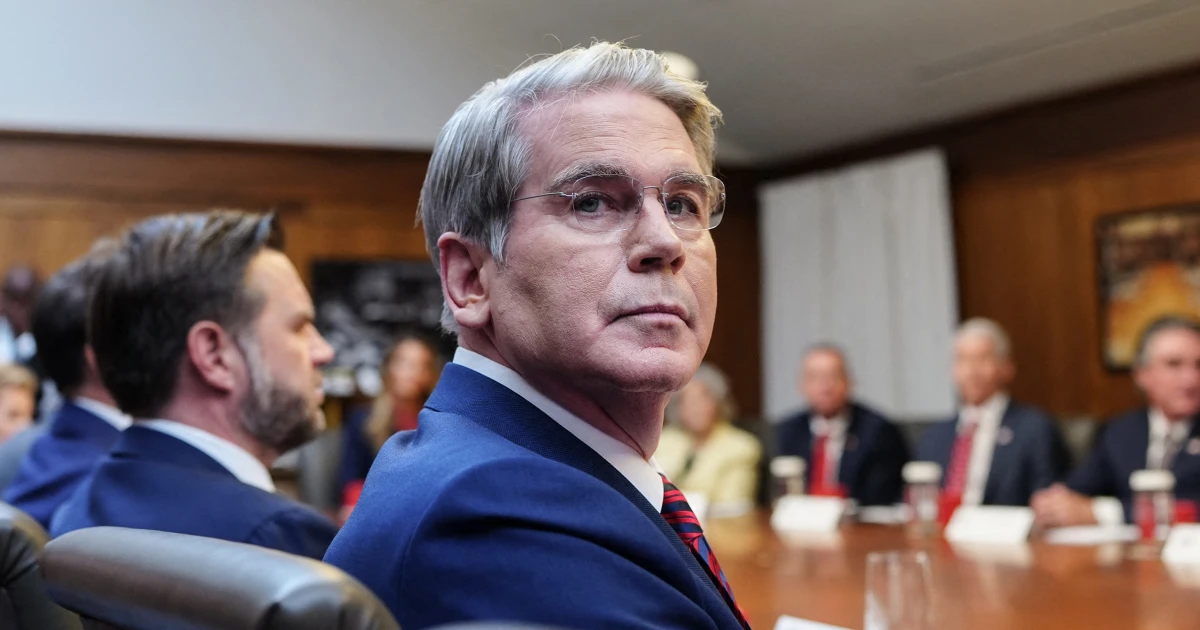
The announcement appears to be the latest effort by the Treasury Department and Secretary Scott Bessent to keep a lid on rates, which have been soaring this year.
Earlier this summer Treasury, along with Japan’s finance ministry, intervened in the sliding Japanese yen. Instead of using dollars to buy yen, the Treasury sold euros and used that money to buy yen. This move — which reportedly caught the European Central Bank by surprise — may have been intended to dissuade Japan from selling some of the trillions of dollars in U.S. Treasury bonds it holds, further driving up yields.
The broader move higher in rates this summer accelerated after Fed chairman Kevin Warsh’s most recent press conference on July 29.
The Fed has “a credibility problem,” wrote KPMG chief economist Diane Swonk in an Aug. 11 note.
Warsh offered little guidance, causing the bond market to begin second-guessing the Fed’s inflation fighting resolve despite continued geopolitical tensions, trade wars and a surge in energy prices stemming from the war with Iran and the Russian invasion of Ukraine.
Read more Israeli military launches criminal probes into killing of Palestinian girl Hind Rajab in Gaza
Following Wednesday’s Treasury announcement, some investors and market-watchers were skeptical that the move would have any lasting impact.
“The market reaction suggests that this is an important tactical move from the Treasury,” said Jim Bullard, former president of the Federal Reserve Bank of St. Louis. “A little bit unexpected,” he said on Bloomberg TV.
“I don’t think it changes the fundamentals of big fiscal deficits and a Fed on the sidelines,” Bullard added, “which is what’s driving longer-term yields higher.”
Economist Mohamed El-Erian said that Treasury’s announcement could help bring down mortgage rates in the “short term,” but it also “risks collateral damage and unintended consequences.”
“The effects of this financial engineering are short dated unless followed by fundamental policy adjustments,” El-Erian wrote on X.
Since the war with Iran began at the end of February, surging energy prices have driven bond yields higher, especially longer-dated yields, as investors bet on higher inflation for longer.
The Federal Reserve has kept rates unchanged this year, unlike central banks in Europe and Japan, which have raised rates in order to try to slow inflation.
“This is NOT a debt paydown,” Peter Boockvar of One Point BFG Wealth said of Wednesday’s buyback announcement. “It is just a rearrangement of the maturity schedule of Treasuries.”
Last year, during a similar Treasury bond sell off, Bessent told Bloomberg News that if needed, he had “a big toolkit that we can roll out,” that included increased government debt repurchases.